

Building a greener future often starts with local innovation and smart partnerships. Tesla’s China Battery Project represents a major step in this journey, focusing on the production of Megapack units at the newly opened Shanghai Megafactory. By working closely with local suppliers like CATL, the facility aims to deliver sustainable energy solutions to the global market while supporting grid stability and renewable integration across the entire region.
Imagine a world where clean energy never runs out, even when the sun goes down. This hook is the reality being built right now in Shanghai, where advanced manufacturing meets carbon neutrality goals. By utilizing LFP battery technology, this infrastructure project ensures a reliable power supply for millions of homes while setting a new industry benchmark for energy storage.
This massive investment in the Lin-gang Special Area highlights the importance of scalability in battery tech. As production capacity ramps up, these utility-scale systems will drive the energy transition by providing efficient backup power and reducing our global reliance on fossil fuels forever.
What Is Tesla’s China Battery Project?
The Shanghai Megafactory is a massive facility dedicated to building Megapack units for utility-scale storage. This infrastructure project produces over 10,000 units annually, focusing on LFP battery chemistry for better safety. It serves as a global export hub, providing clean energy solutions to international markets and stabilizing local power networks.
| Project Milestone | Completion Date |
| Groundbreaking | May 2024 |
| First Production | February 2025 |
| 1,000th Unit Milestone | July 2025 |
In 2026, the project has reached a steady-state production rhythm, supplying critical grid-forming technology to Europe and Australia. By utilizing advanced automation, the factory has significantly lowered the unit cost of storage. This makes large-scale decarbonization more affordable for governments aiming to meet strict net-zero targets.
Why Tesla Chose China for Its Battery Project
Tesla picked the Lin-gang Special Area because of its world-class supply chain and advanced manufacturing speed. By partnering with local suppliers like CATL, they achieve lower production costs and faster logistics. This strategic location allows for seamless shipping to regions needing urgent grid modernization and decarbonization efforts.
| Location Benefit | Impact |
| 4-Hour Supply Circle | Sourcing all parts locally |
| Nangang Port Proximity | Direct Global Export access |
| Lin-gang FTZ | Tax and Customs Incentives |
The regulatory environment in Shanghai provides a unique competitive advantage for rapid scalability. Local infrastructure and skilled labor ensure that the yield rate remains high while maintaining global quality standards. This partnership reinforces China’s role as the epicenter of the world’s battery ecosystem.
The Role of Energy Storage in Renewable Energy
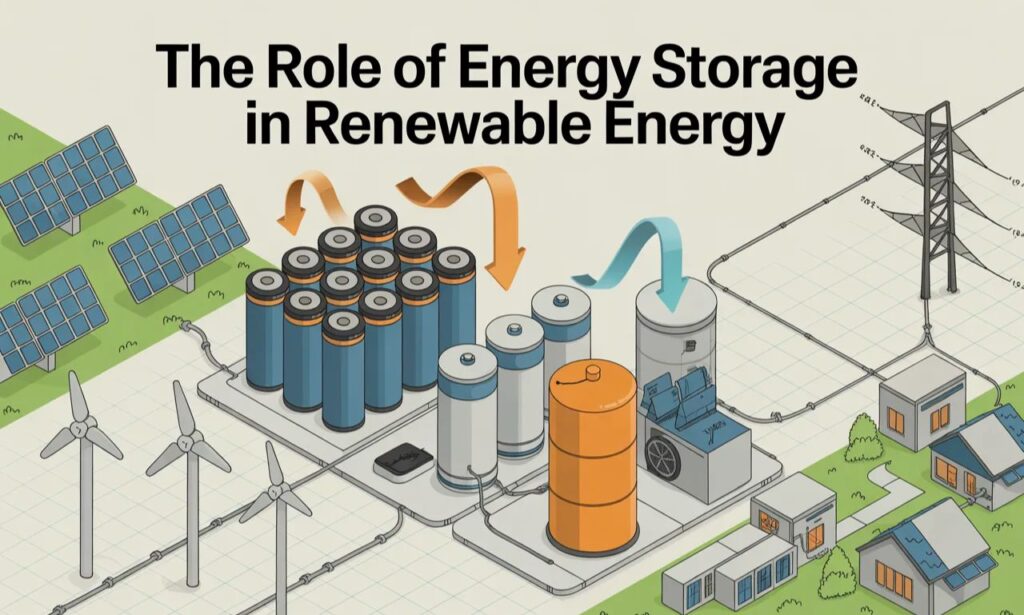
Energy storage acts as a smart regulator by saving excess power during sunny or windy days. This buffer is essential for renewable integration, as it prevents energy waste and manages peak demand. Without large-scale batteries, many green energy sources would be
| Impact Metric | Traditional Grid | Modernized Grid |
| Carbon Intensity | High (Coal/Gas) | Low (Renewable) |
| Flexibility | Rigid & Slow | Highly Dynamic |
| Reliability | Mechanical Risk | Digital Resilience |
Modern grid services now rely on these batteries to perform frequency regulation in milliseconds. As fossil fuel plants are retired, distributed storage ensures the lights stay on during peak load times. This shift is the backbone of a sustainable and resilient national energy strategy.
How Tesla’s Megapack Supports Renewable Energy
The Megapack provides critical grid support by offering frequency regulation and backup power during blackouts. These integrated systems replace old fossil fuel plants with sustainable energy that responds instantly to grid signals. This scalability ensures that urban electricity remains stable even as more solar and wind farms go online.
| Deployment Goal | 2026 Target |
| Australia Capacity | 4.5 GW Grid-forming BESS |
| Shanghai Local Goal | Zero-Carbon Grid Demo |
| Global Install Time | 1 GWh in 20 days |
Equipped with AI-driven software, each unit can perform predictive maintenance and optimize energy arbitrage. This means the system knows exactly when to discharge power to maximize revenue and efficiency. These modular units are now the industry benchmark for safe, high-density energy storage.
Tesla’s China Megapack Project
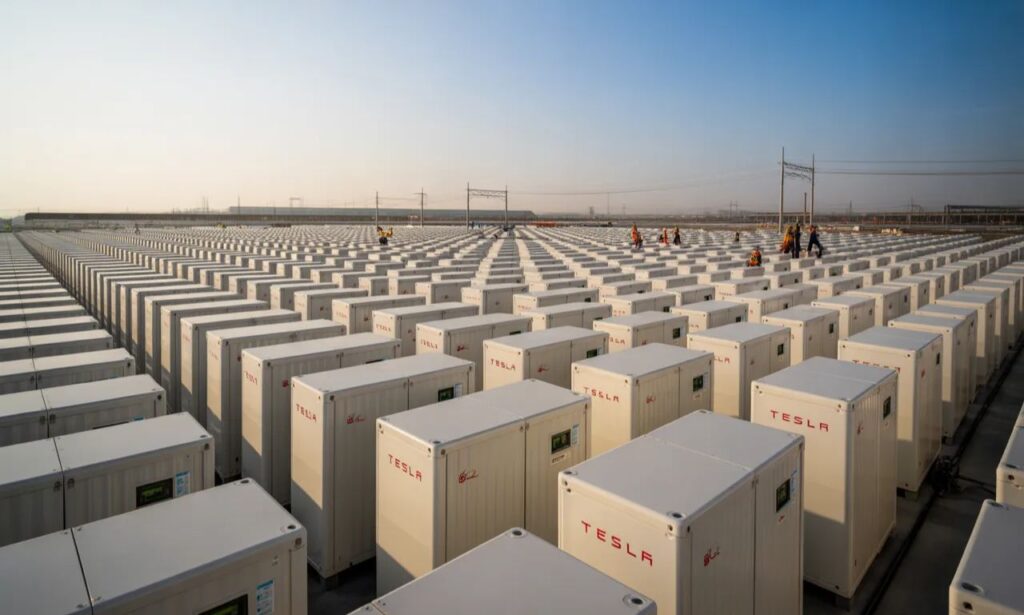
The Shanghai Megafactory is a high-tech facility focused on producing Megapack systems for global export. This infrastructure project uses LFP battery chemistry to ensure safety and grid stability. By localizing advanced manufacturing, Tesla strengthens its supply chain while meeting the rising utility-scale energy needs of the Asia-Pacific region.
This project represents a multi-million dollar investment aimed at accelerating the energy transition through sustainable energy storage. As production capacity ramps up, these units provide backup power and frequency regulation for modern smart grids. This move secures Tesla’s role as a leader in the renewable integration market worldwide.
Why This Matters for Tesla’s Business and EV Strategy
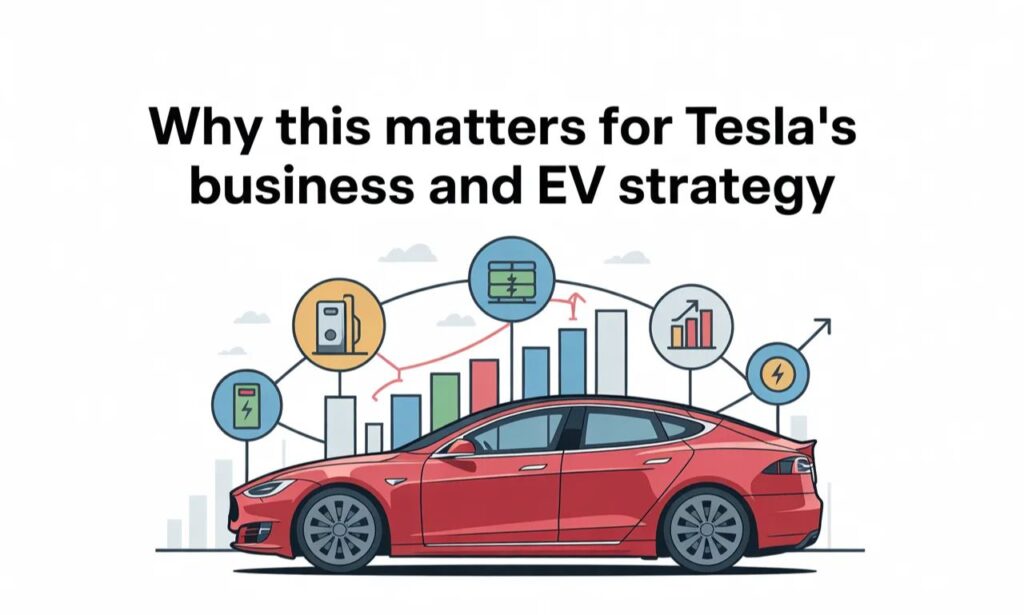
Tesla is shifting its business model to balance vehicle sales with energy generation. The China battery project reduces production costs by utilizing a local supplier network, including CATL. This vertical integration ensures that Tesla remains a market leader despite increasing competition in the electric vehicle sector.
- The project creates a diversified revenue stream that protects the company’s profit margins when EV demand fluctuates or market share faces pressure from rivals.
- By building batteries near raw material sources, Tesla achieves significant logistics savings and improves its operational efficiency across the entire global supply chain.
- High-volume storage production allows Tesla to offer bundled solutions that combine solar energy with home charging, enhancing the overall customer experience for owners.
- Strategic manufacturing hubs in China enable faster shipping times to Europe and Australia, where grid modernization projects are currently in high demand.
- This strategy supports the launch of affordable EVs by scaling battery tech that lowers the cost per kilowatt-hour for all Tesla products.
Tesla’s China Deal Meets ESG Expectations Amid Musk’s Skepticism
Despite executive doubts about ESG frameworks, this investment aligns perfectly with carbon neutrality goals. The project promotes clean energy by replacing fossil fuel plants with zero-emission storage. By focusing on governance and social impact, Tesla satisfies institutional investors who prioritize sustainable development and ethical business practices.
- Large-scale battery storage is a critical environmental metric that helps China meet its net-zero targets by reducing reliance on coal-fired power plants.
- The facility provides thousands of high-skilled jobs, contributing to the local economy and fulfilling the social responsibility requirements of global ESG standards.
- Transparent partnerships with firms like China Kangfu demonstrate strong corporate governance and a commitment to regulatory compliance in international joint ventures.
- Using LFP chemistry reduces the need for conflict minerals like cobalt, addressing human rights concerns within the global battery supply chain.
- This deal serves as a sustainability benchmark, showing that industrial scale can successfully coexist with eco-friendly objectives in a decarbonized economy.
Tesla’s Innovation Highlighted at VivaTech 2026
At the VivaTech conference, Tesla showcased how AI-driven software like Autobidder manages energy arbitrage. This innovation highlights the synergy between robotics and energy storage systems. By presenting cutting-edge tech, Tesla proves it is more than a car company, but a technology leader in predictive maintenance.
- The event featured the Optimus humanoid robot, demonstrating how AI integration will eventually automate complex tasks within Tesla’s smart factories and households.
- Tesla’s FSD Computer (now called the AI Computer) was a main attraction, showcasing real-world AI capabilities that power both autonomous driving and robotics.
- Developers explored the open-source potential of Tesla’s energy software, which allows for decentralized power management in microgrid settings and local energy communities.
- The exhibition focused on modular design, showing how Megapacks can be stacked to create gigawatt-hour installations in a matter of only weeks.
- Attendees witnessed live demos of V4 Supercharging, highlighting how high-density batteries enable faster charging speeds for the next generation of electric transport.
Impact of Tesla China Battery Project on Global Renewable Energy
The Shanghai Megafactory creates a massive supply chain shift by exporting Megapack units worldwide. This infrastructure expansion helps lower the cost per kilowatt-hour for international markets. By providing grid-scale storage, the project accelerates decarbonization efforts and improves energy security for countries transitioning to clean power sources.
These utility-scale batteries allow for renewable integration on a massive scale. As production capacity grows, it stabilizes the global market by reducing the intermittency of green power. This technological innovation ensures that sustainable energy becomes a reliable and affordable choice for modern grids everywhere.
China’s Growing Renewable Energy Market
China leads the world in solar and wind installations, creating a huge demand for storage solutions. The local market is shifting toward carbon neutrality through rapid electrification and smart grid updates. This environment allows advanced manufacturing to thrive while supporting the nation’s ambitious green energy targets.
The Lin-gang Special Area serves as a hub for battery tech and clean energy development. With high investment in LFP battery production, the region supports grid modernization across Asia. This growth ensures a stable power supply while significantly reducing the long-term reliance on fossil fuel generation.
Environmental Benefits of Tesla’s Renewable Energy Storage
Replacing peaker plants with battery storage significantly cuts down on global greenhouse gas emissions. These zero-emission systems provide backup power without the air pollution caused by traditional coal or gas. It is a vital step toward achieving net-zero goals and protecting our natural ecosystems.
[Image showing a comparison between a coal power plant and a Tesla Megapack farm]
By managing peak demand efficiently, these units prevent energy waste during high production hours. This load balancing creates a more resilient grid that thrives on intermittent resources like wind. Using sustainable energy storage is the most effective way to ensure a low-carbon future for everyone.
Frequently Asked Questions (FAQs)
What is the annual production capacity of the Shanghai Megafactory?
The facility is designed to produce 10,000 units per year. This totals roughly 40 GWh of energy storage for global markets.
Which battery chemistry does the Shanghai Megapack use?
It primarily utilizes Lithium Iron Phosphate (LFP) battery technology. This chemistry offers enhanced safety and a longer cycle life.
Where is the Tesla China battery project located?
The factory is situated in the Lin-gang Special Area, Shanghai. This strategic zone allows for efficient manufacturing and rapid global exports.
How does the Megapack support the electrical grid?
It provides critical services like frequency regulation and backup power. These systems prevent blackouts and help stabilize modern power networks.
What is the storage capacity of a single Megapack unit?
Each Megapack 2 XL unit stores about 3.9 MWh of electricity. That is enough to power roughly 3,600 homes for one hour.
Who are the main customers for the Shanghai-made Megapacks?
Most units are produced for export to Europe and Australia. They serve utility companies and large-scale renewable energy storage projects.
How does this project help the environment?
It replaces fossil fuel peaker plants with clean, stored energy. This shift significantly reduces greenhouse gas emissions and carbon footprints.
What software manages these large-scale battery systems?
Tesla uses AI-driven platforms like Autobidder and Opticaster for management. These tools optimize energy trading and predict renewable energy loads.
Is the Shanghai Megafactory the first of its kind?
It is Tesla’s first dedicated energy storage factory outside the U.S. The project mirrors the successful Lathrop Megafactory located in California.
How fast can a Megapack system be installed?
The units arrive pre-assembled and pre-tested for rapid site deployment. This modular design reduces installation time compared to traditional plants.
Conclusion
The Shanghai Megafactory marks a pivotal shift in how the world approaches grid-scale energy. By combining advanced manufacturing with a robust local supply chain, Tesla has created a global export hub that makes clean energy more accessible. This project proves that industrial scalability is the fastest way to achieve a low-carbon future and long-term grid resilience.
Looking ahead, the success of this infrastructure ensures that renewable integration will only continue to grow. As production capacity meets the soaring global demand, the transition away from fossil fuels becomes a reality. Tesla’s commitment to innovation in China serves as a powerful industry benchmark for the entire sustainable energy sector.

Denzel is a passionate Christian writer with 4 years of experience in Bible and prayer blogging. He is currently sharing his inspiring spiritual writings on BibleNests.com, helping readers grow in faith and hope.
